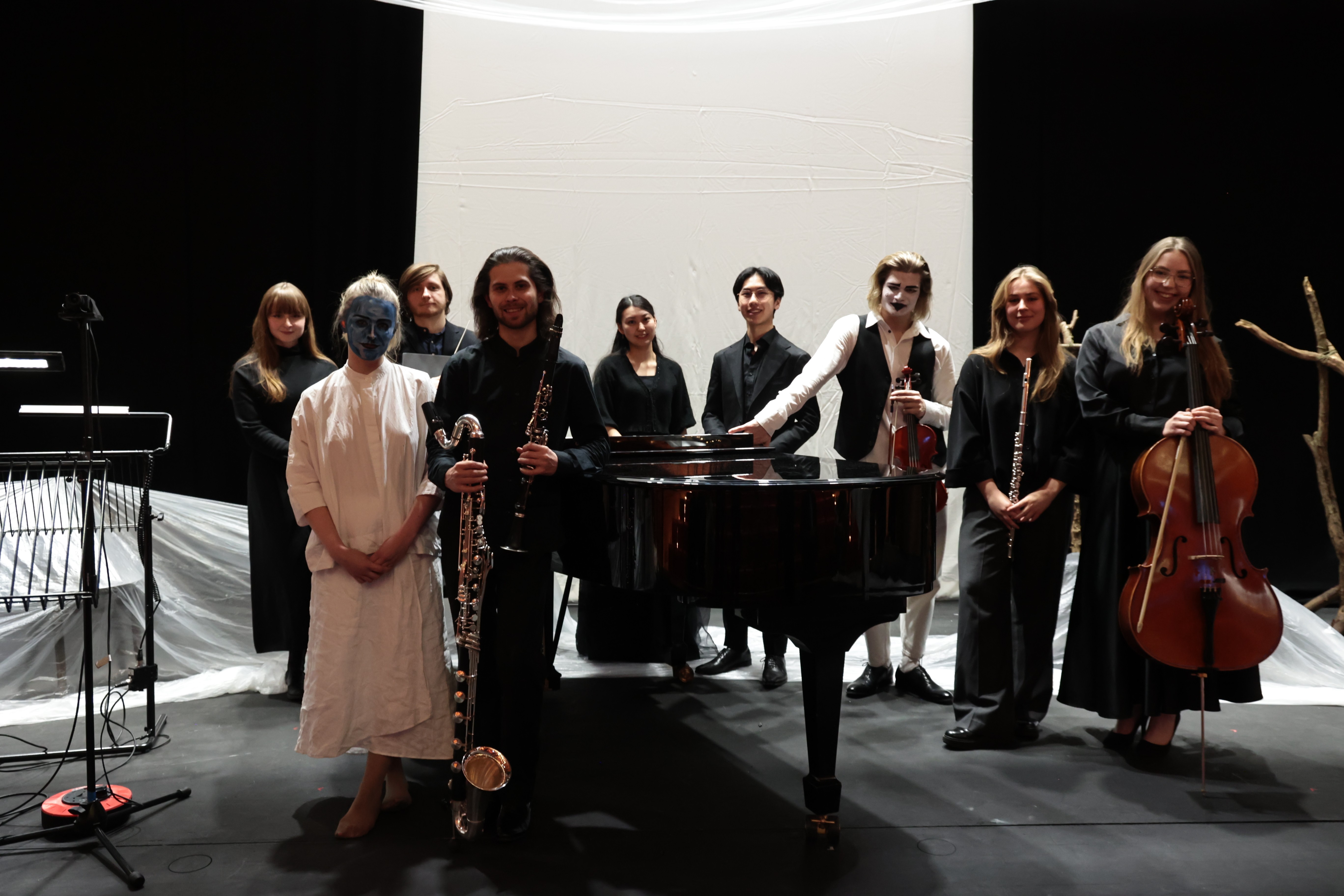
Pierrot Lunaire
Susie Sainsbury Theatre at the Royal Academy of Music, January 2025
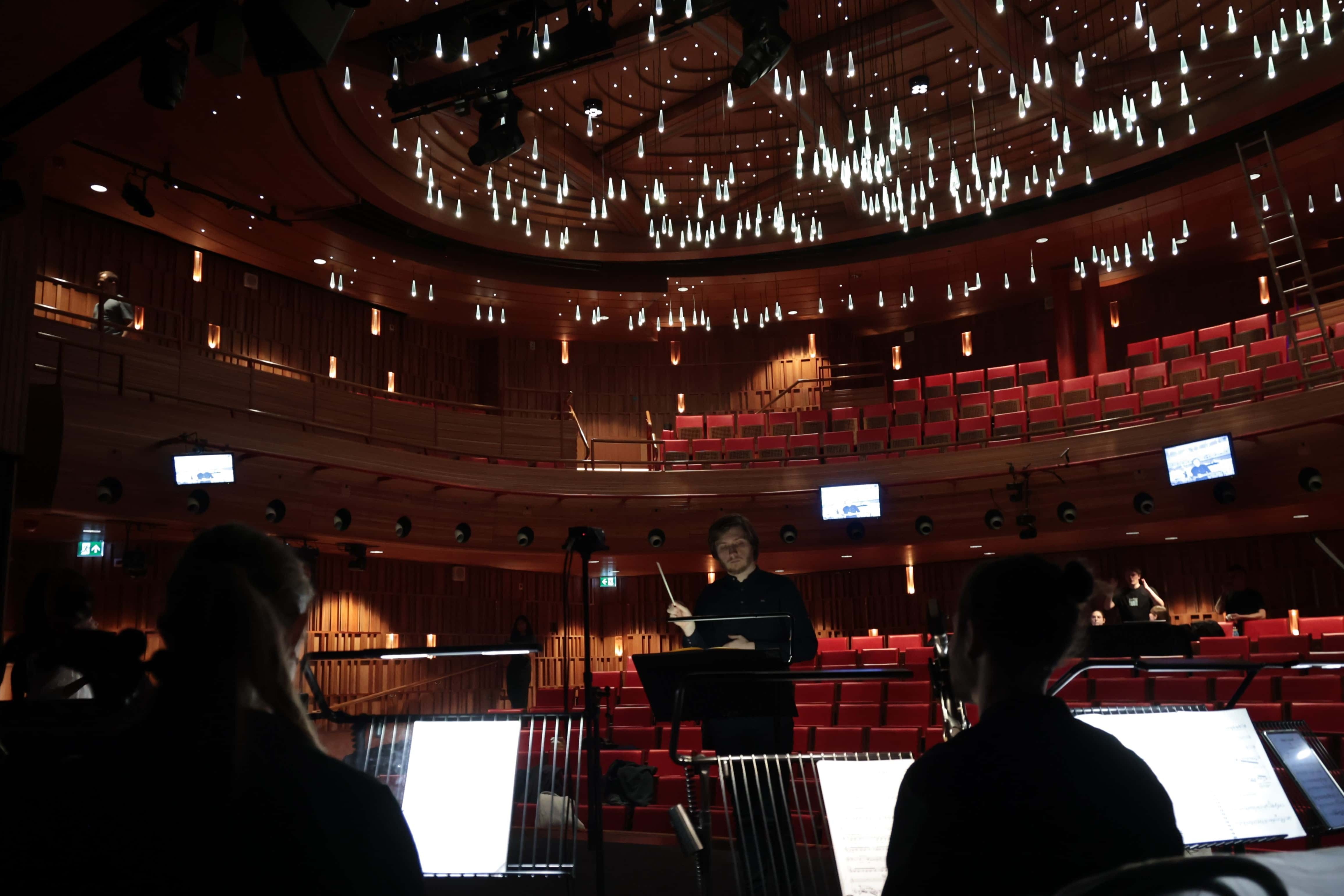
A stage production of Schönberg's Pierrot Lunaire at the Royal Academy of Music, reimagining the 40-minute atonal song cycle through projection, scenography, and psychological visual storytelling.
£0
External budget
180
Attendees
58%
Capacity
23
Collaborators directed
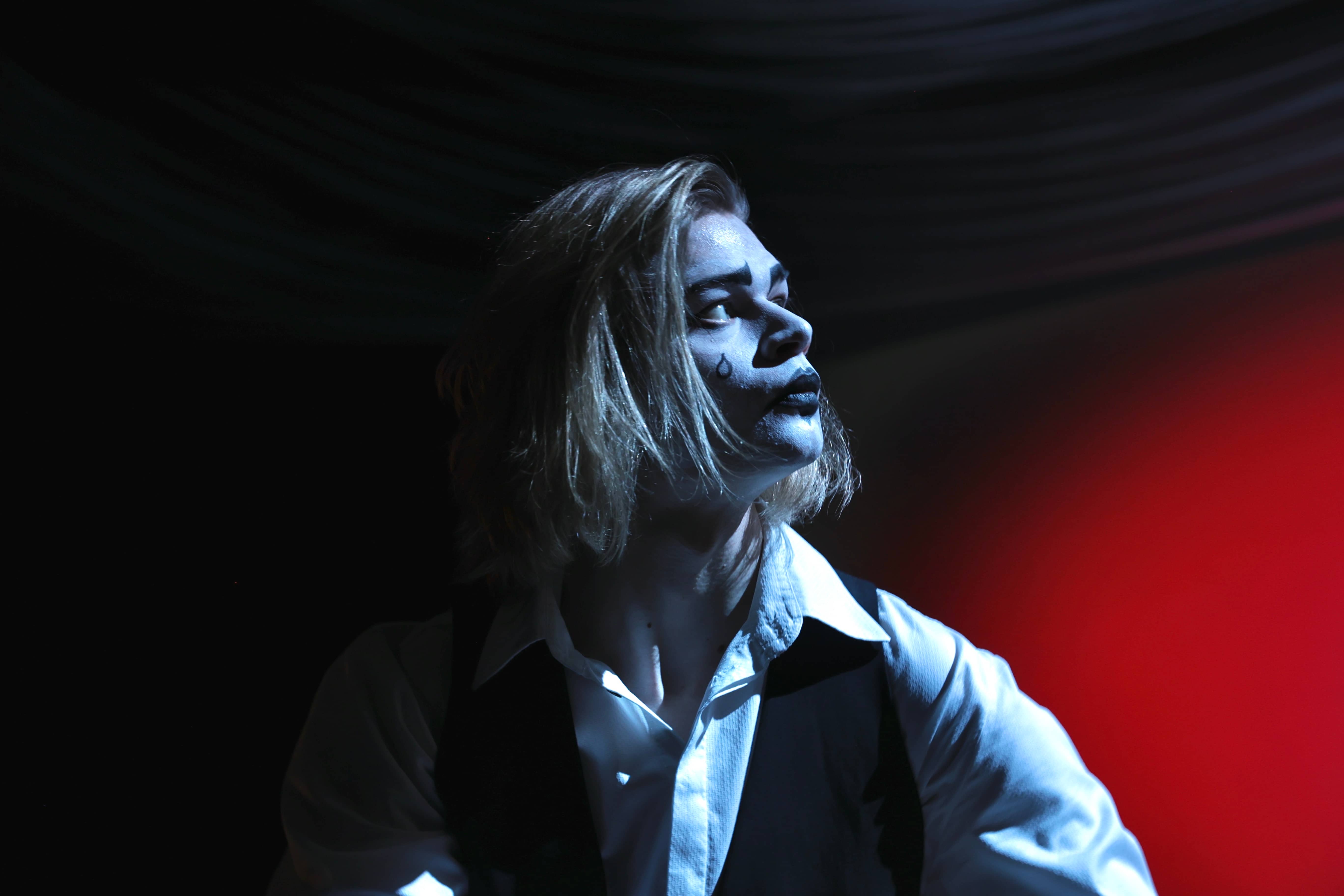
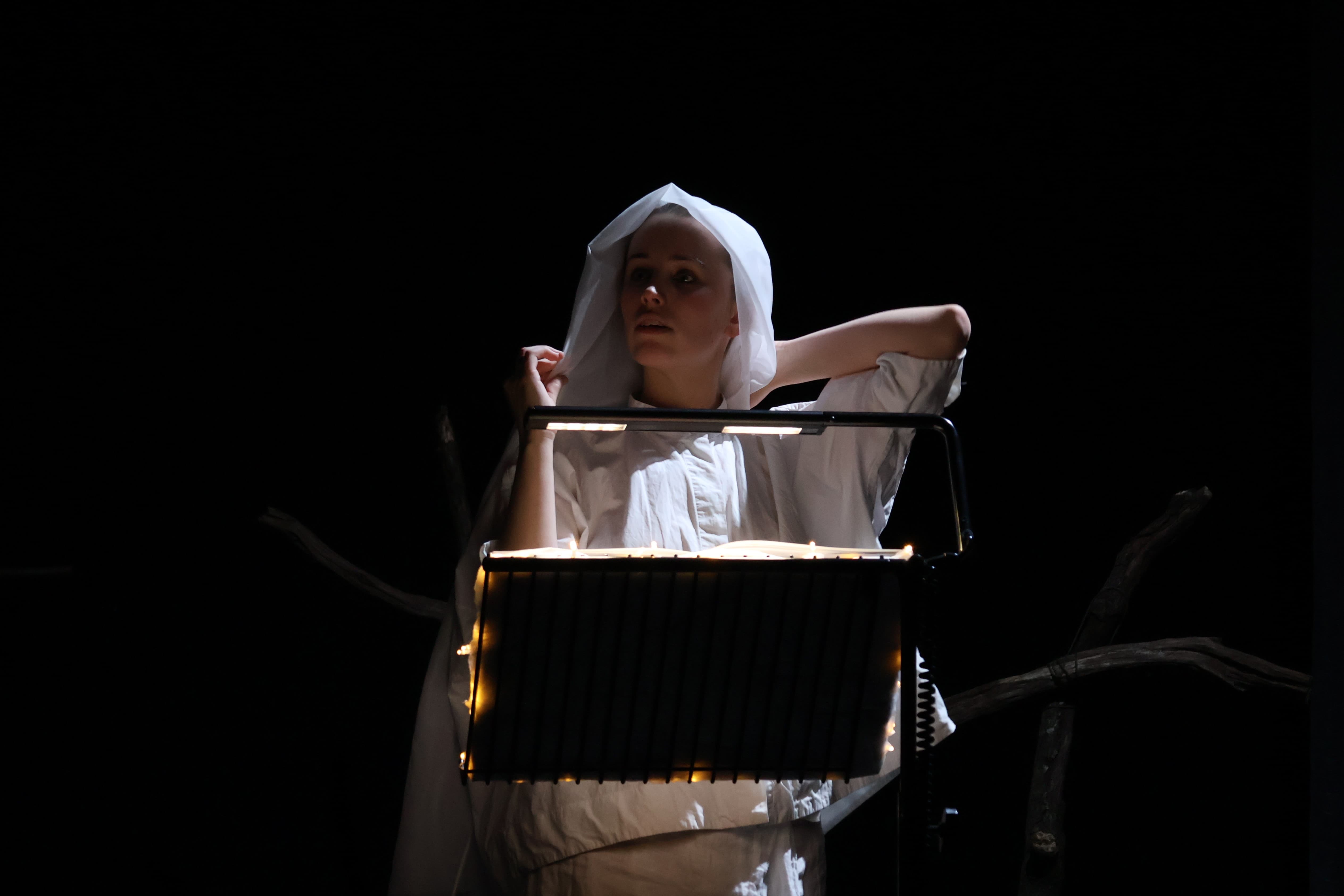
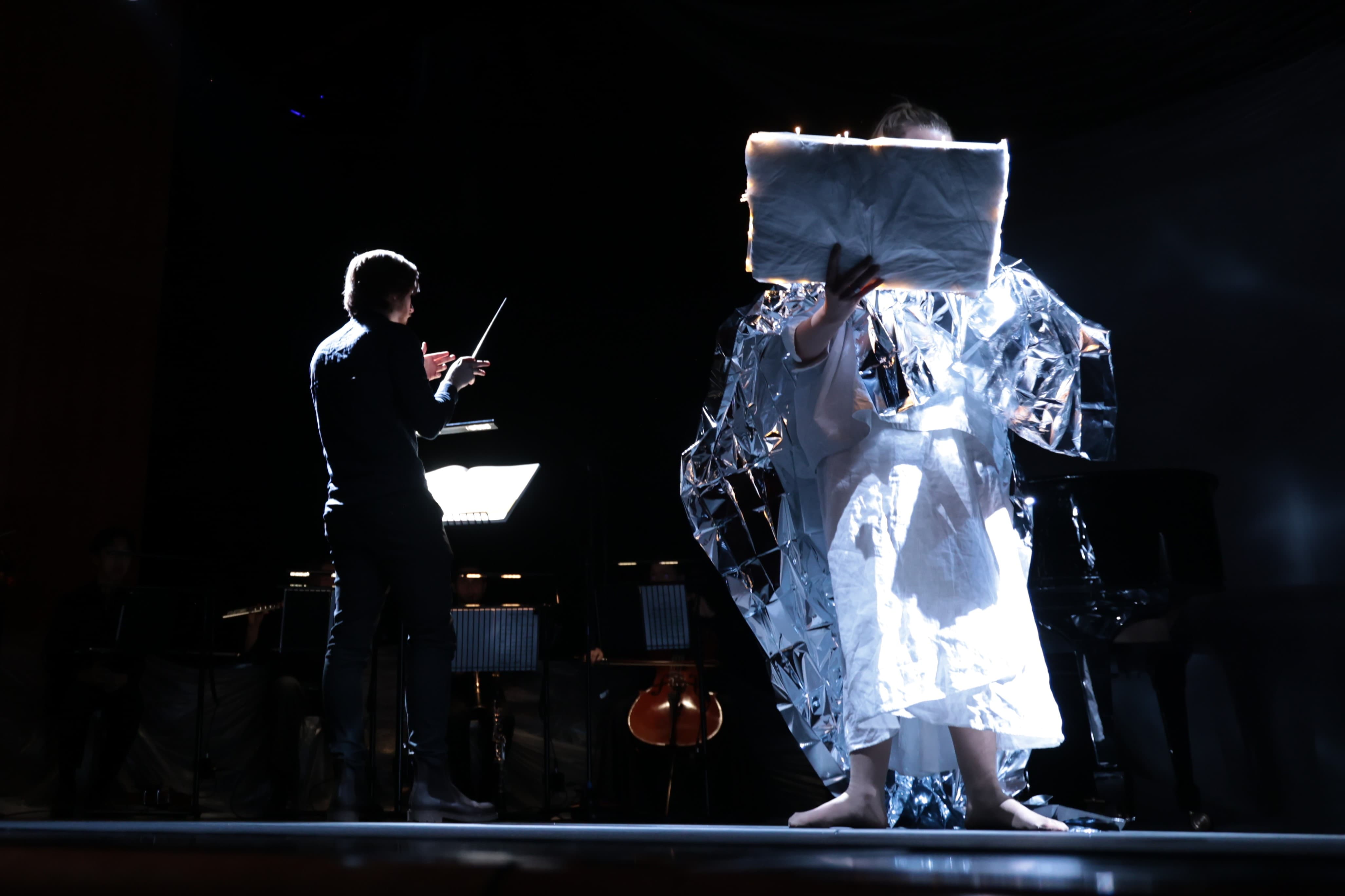
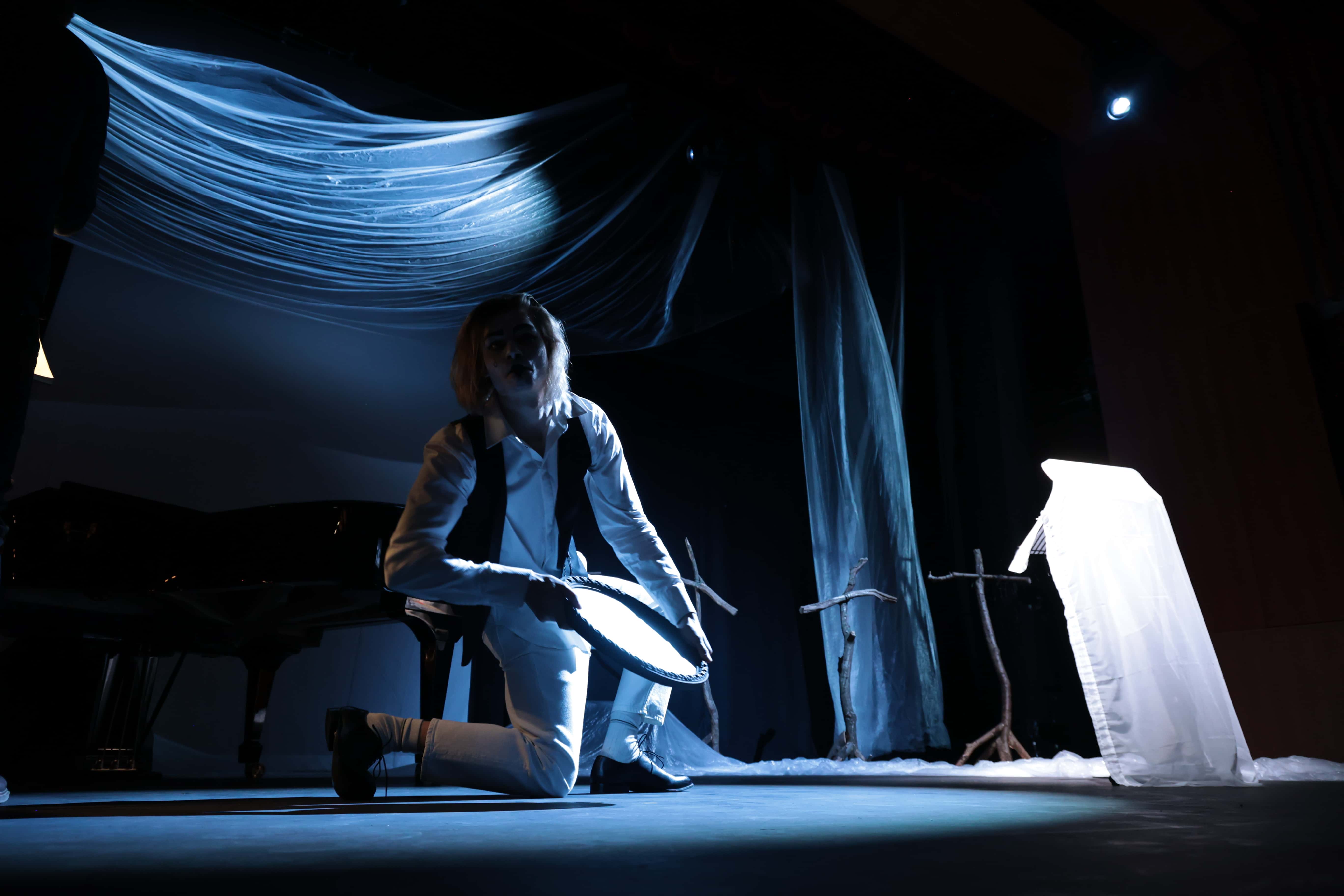
What was your specific role in this production?
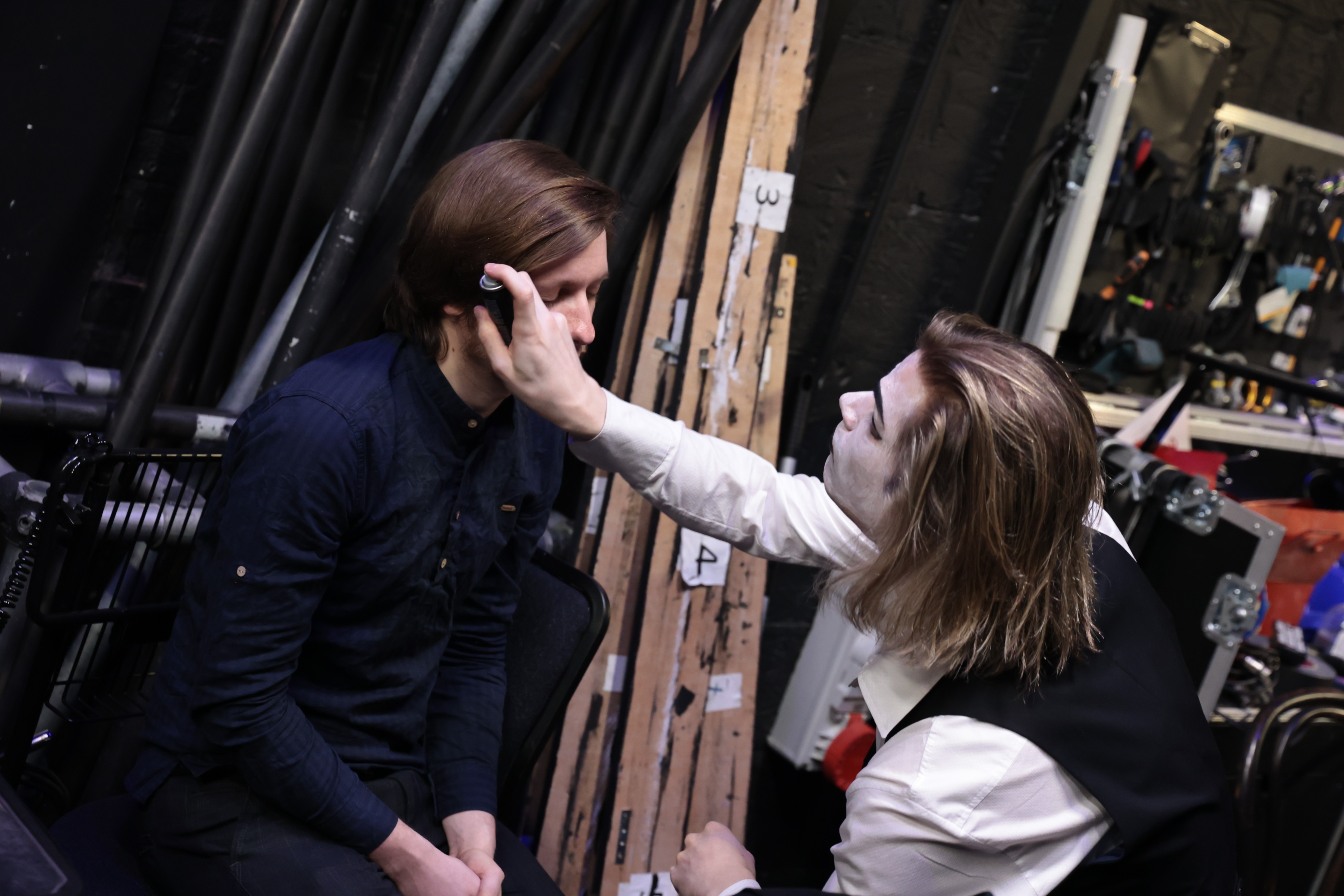
I served as Visual Lead, responsible for the overall visual concept, scenographic direction, and projection design. This meant translating Schönberg's symbolic and psychological world into a coherent visual language — from the initial site visit through to the final performance. While the process was deeply collaborative and rehearsal-driven, all visual decisions ultimately ran through me, including material choices, lighting design, projection content, and the spatial relationship between performer and environment.
How did you manage the timeline and budget constraints?
The entire production was developed and staged in under two months, with no external budget — relying entirely on in-house equipment and materials. Rather than treating these as limitations, they became creative parameters. The decision to centre the visual concept around a single plastic dust sheet, for example, came directly from the constraint of minimal resources. Working within tight boundaries forced early conceptual clarity and disciplined decision-making, which ultimately gave the production a stronger and more coherent visual identity than a larger budget might have allowed.
How did you handle a team of that size across so many different disciplines?
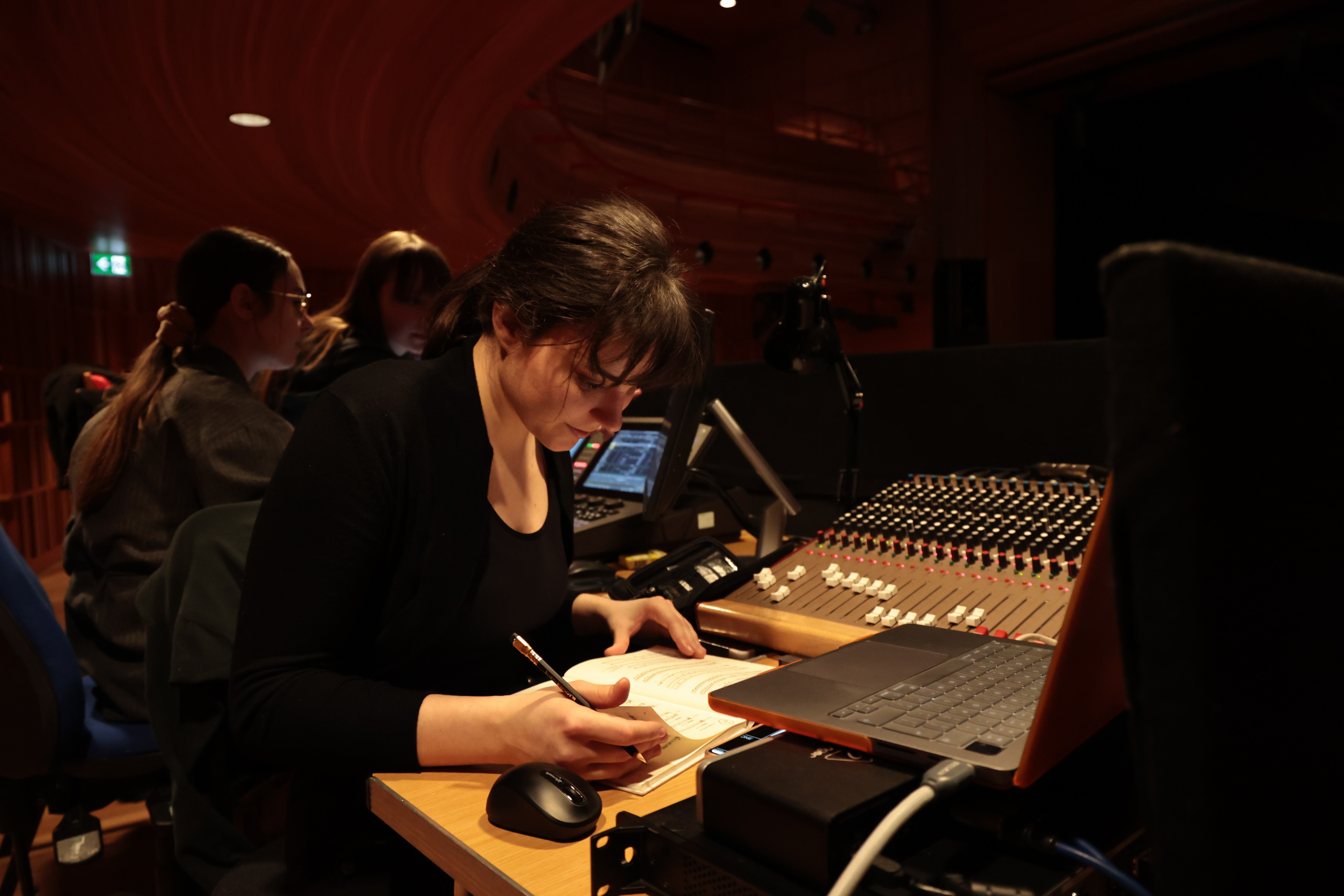
Coordinating 23 people — spanning visual artists, stage technicians, and marketing — required clear communication structures and a shared creative framework from the outset. I made sure every collaborator understood not just their individual brief, but the overarching conceptual logic of the production, so that decisions could be made independently without losing coherence. The rehearsal-driven process was key to this. It created a space where the staging could evolve organically while keeping the whole team aligned around the same artistic vision.
Overview
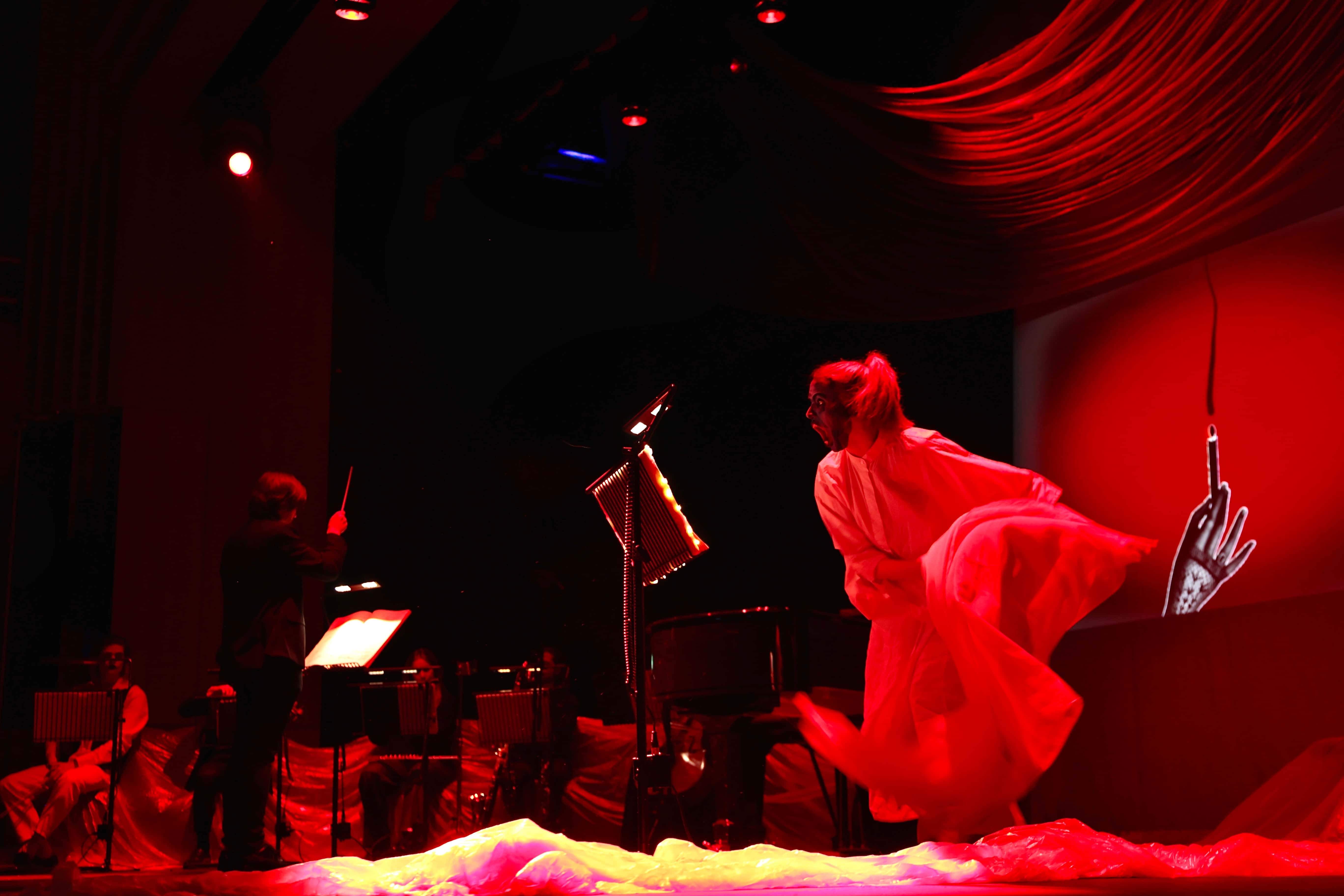
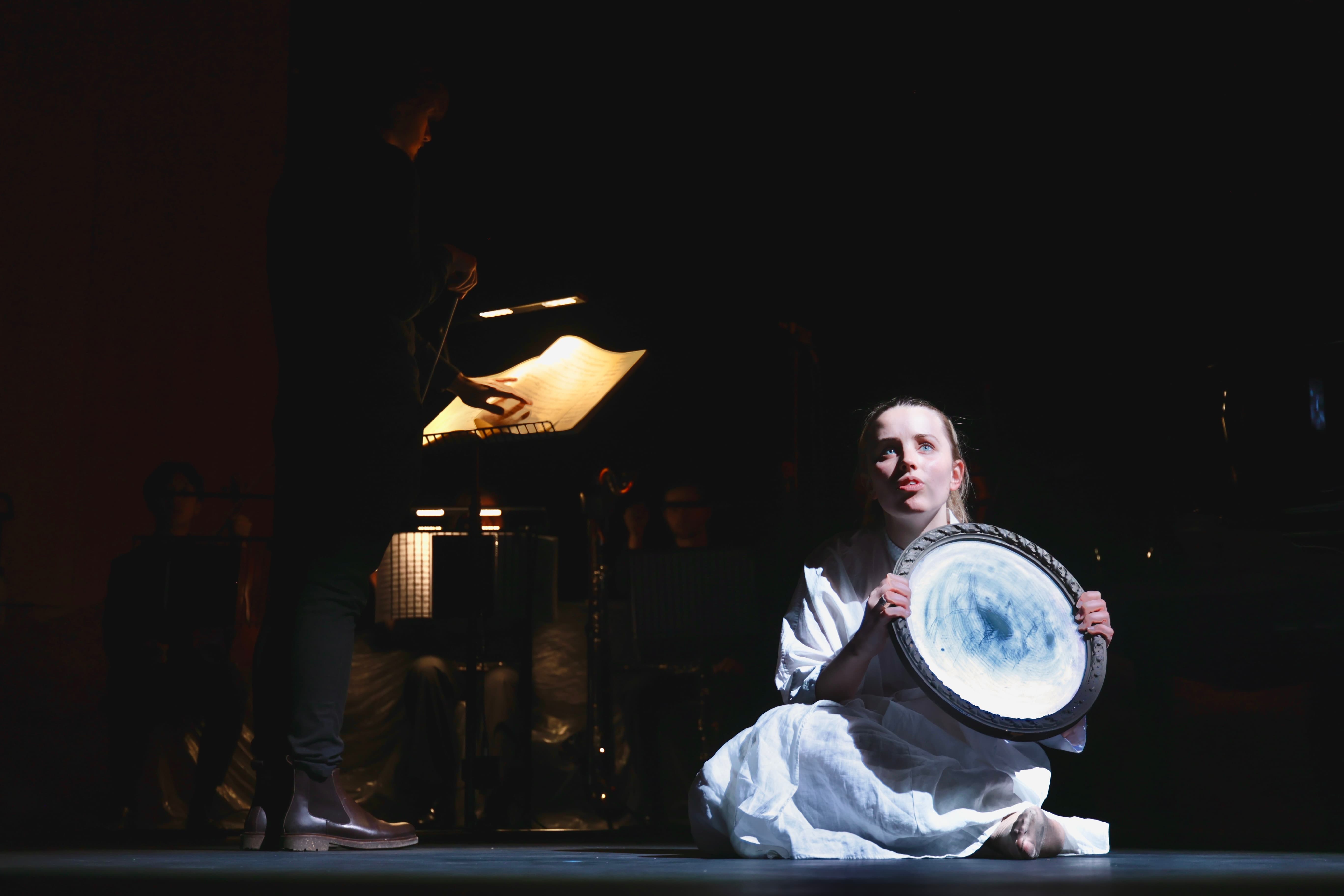
A stage production of Schönberg's Pierrot Lunaire at the Royal Academy of Music, reimagining the 40-minute atonal song cycle as a contemporary study in identity, fragmentation, and psychological obsession. As Visual Lead, I directed a 23-person team of artists, technicians, and marketers from initial concept through to opening night, delivered in under two months, on zero external budget.
Research
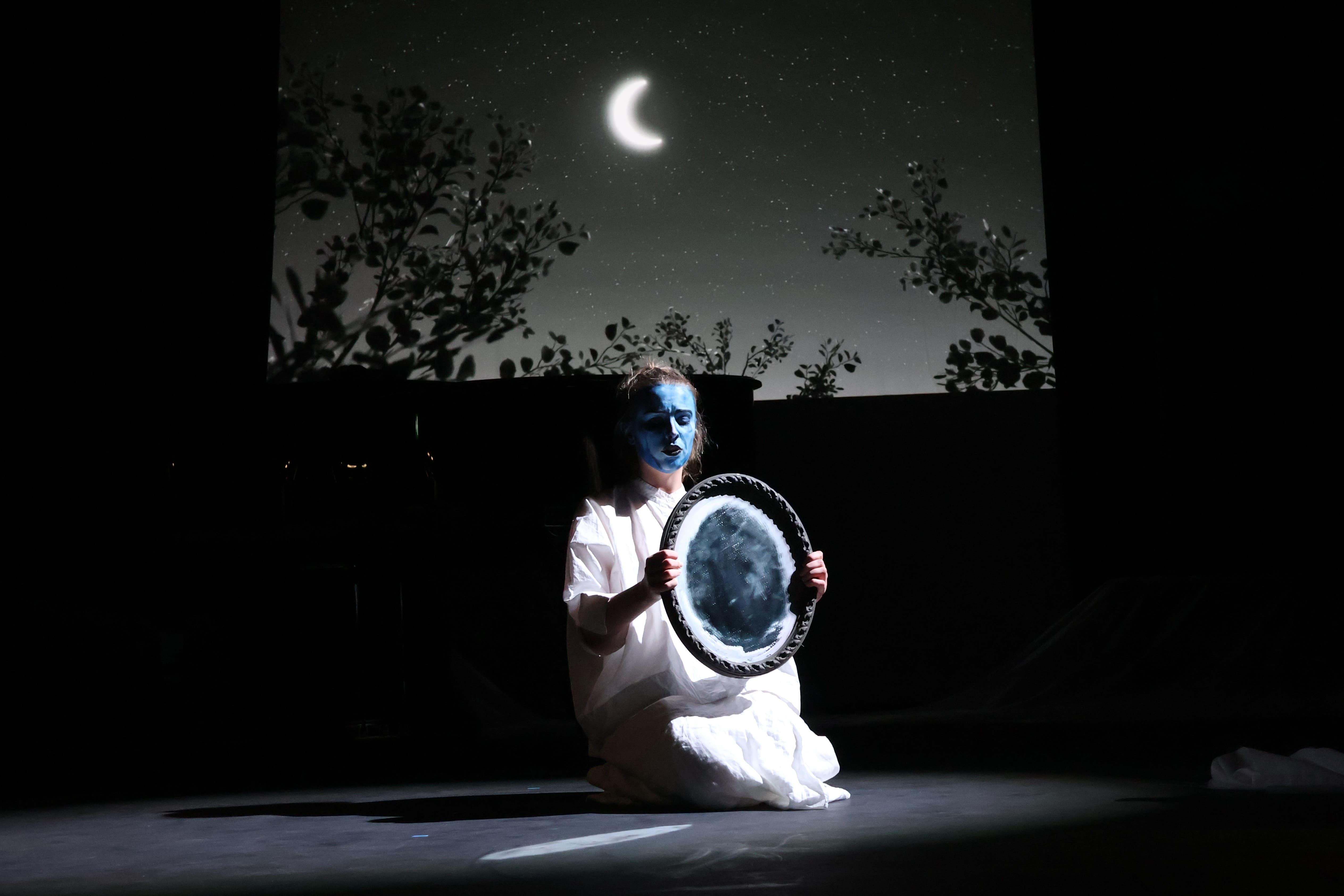
The visual language was rooted in deep research into Schönberg's own preoccupations, numerology, mortality, religious critique, and structural symbolism. His use of recurring numbers and symbolic frameworks directly informed the dramatic pacing and scenographic decisions. Influences from designers Michael Levine and Klaus Grünberg shaped the spatial atmosphere, while Hasan Özudogru's cross motifs became a recurring visual thread, grounding Schönberg's critique of religious orthodoxy in the physical space.
Development
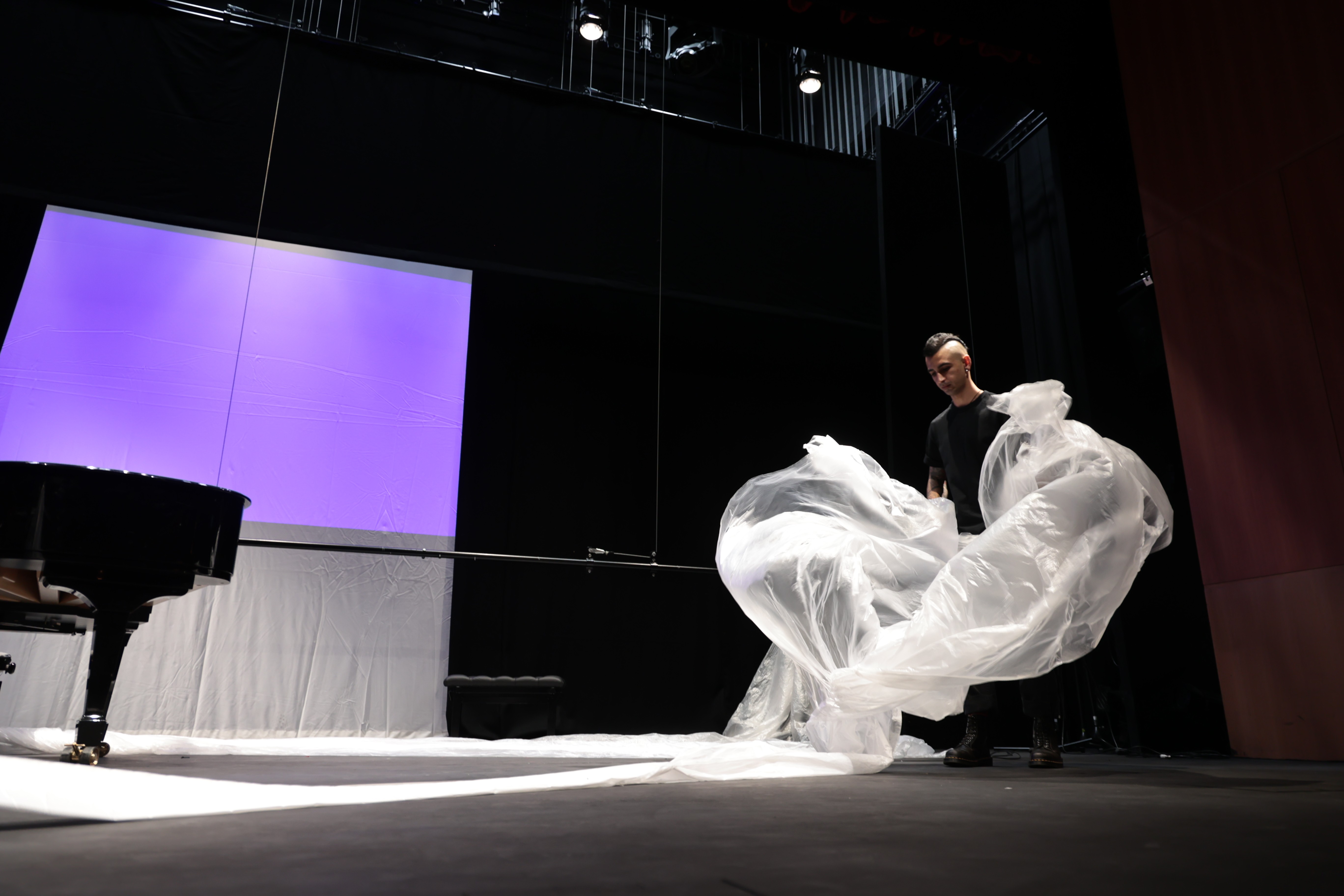
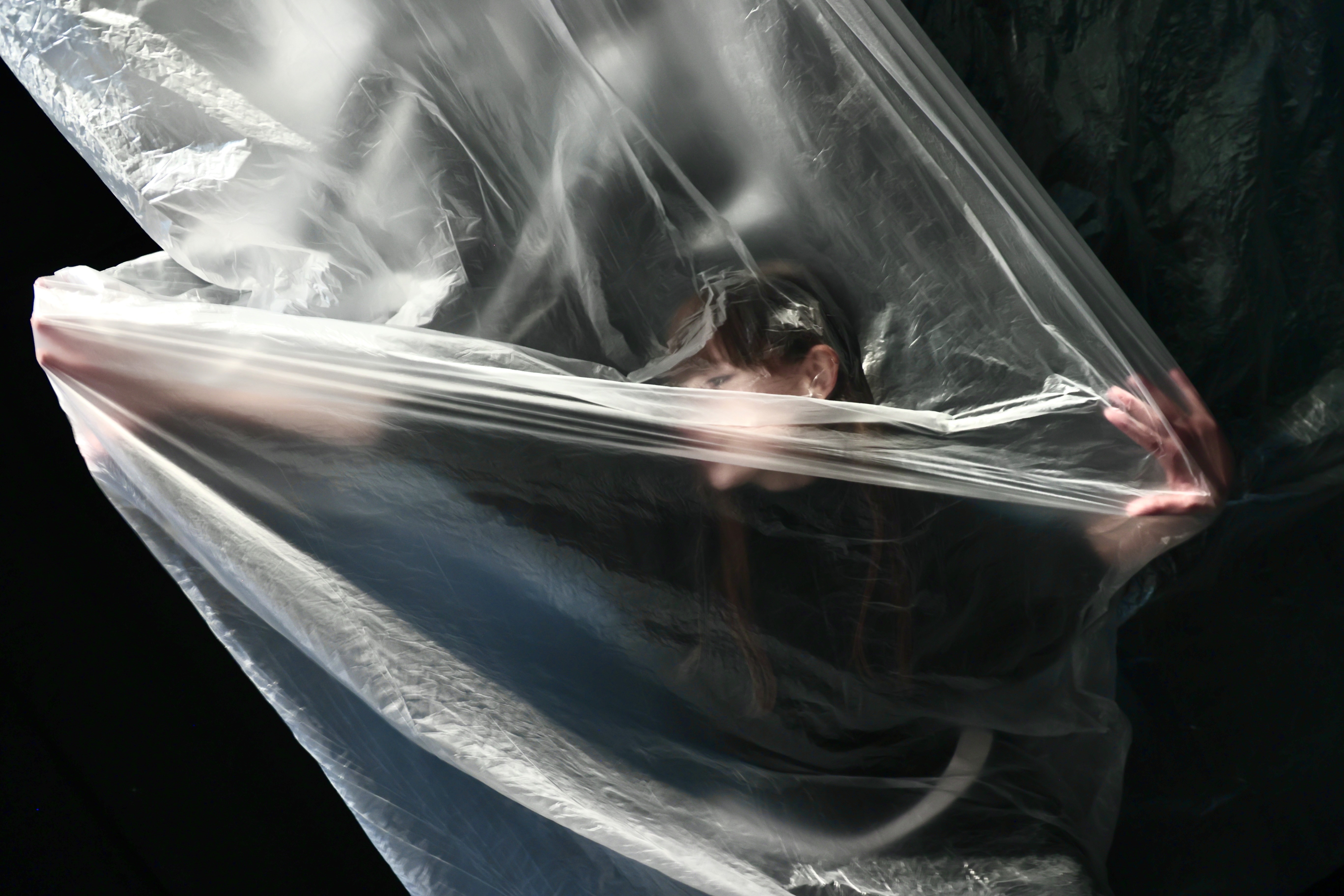
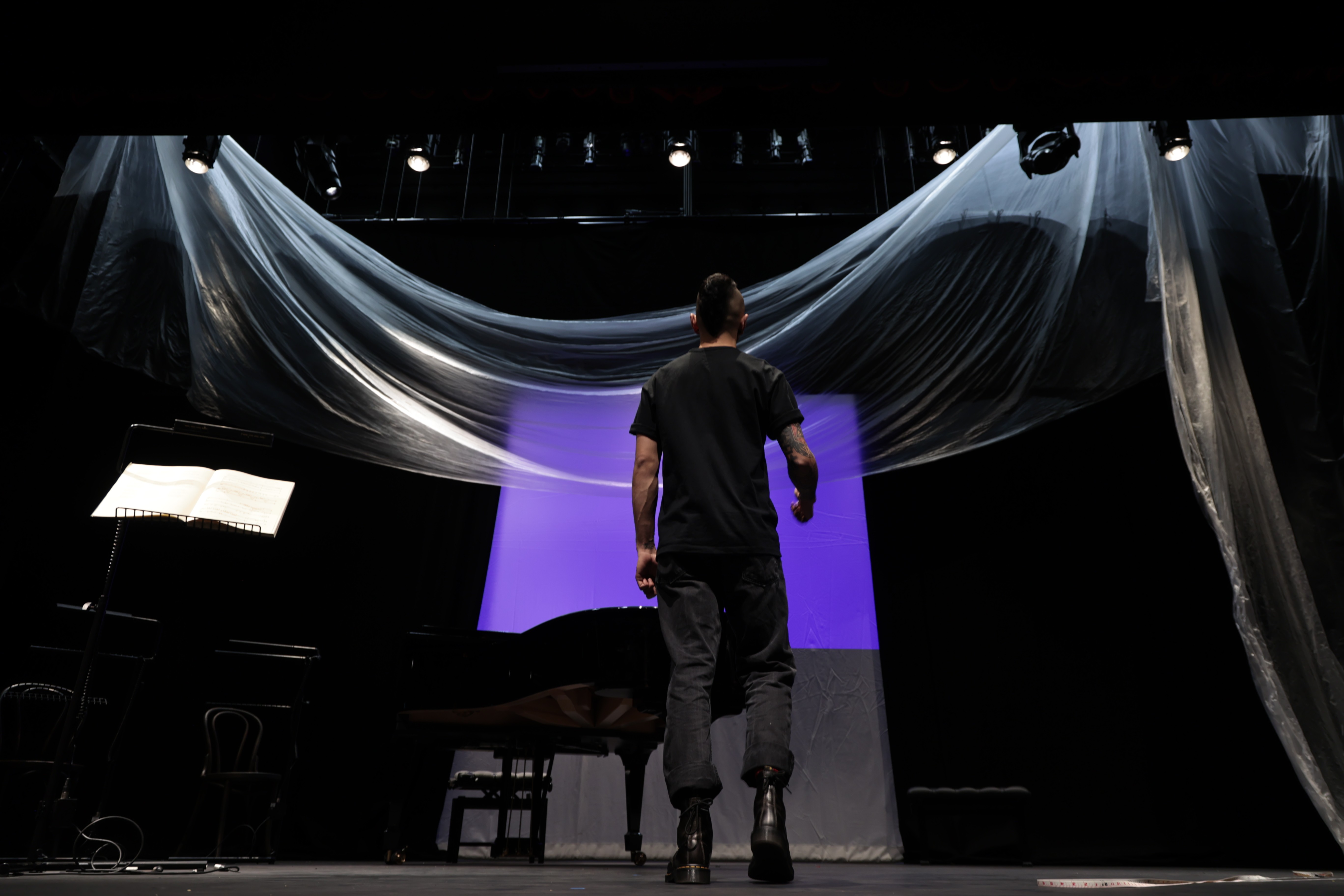
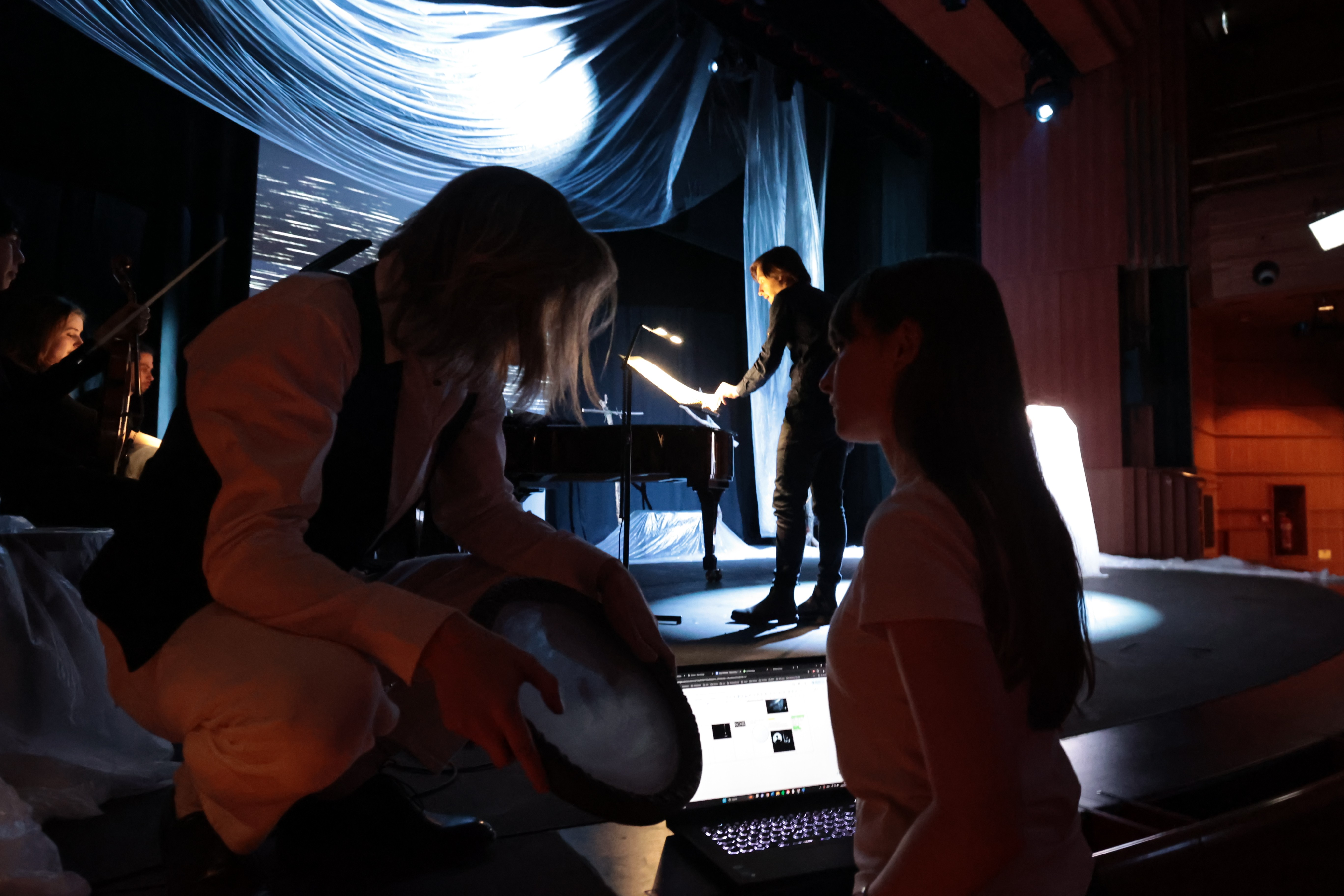
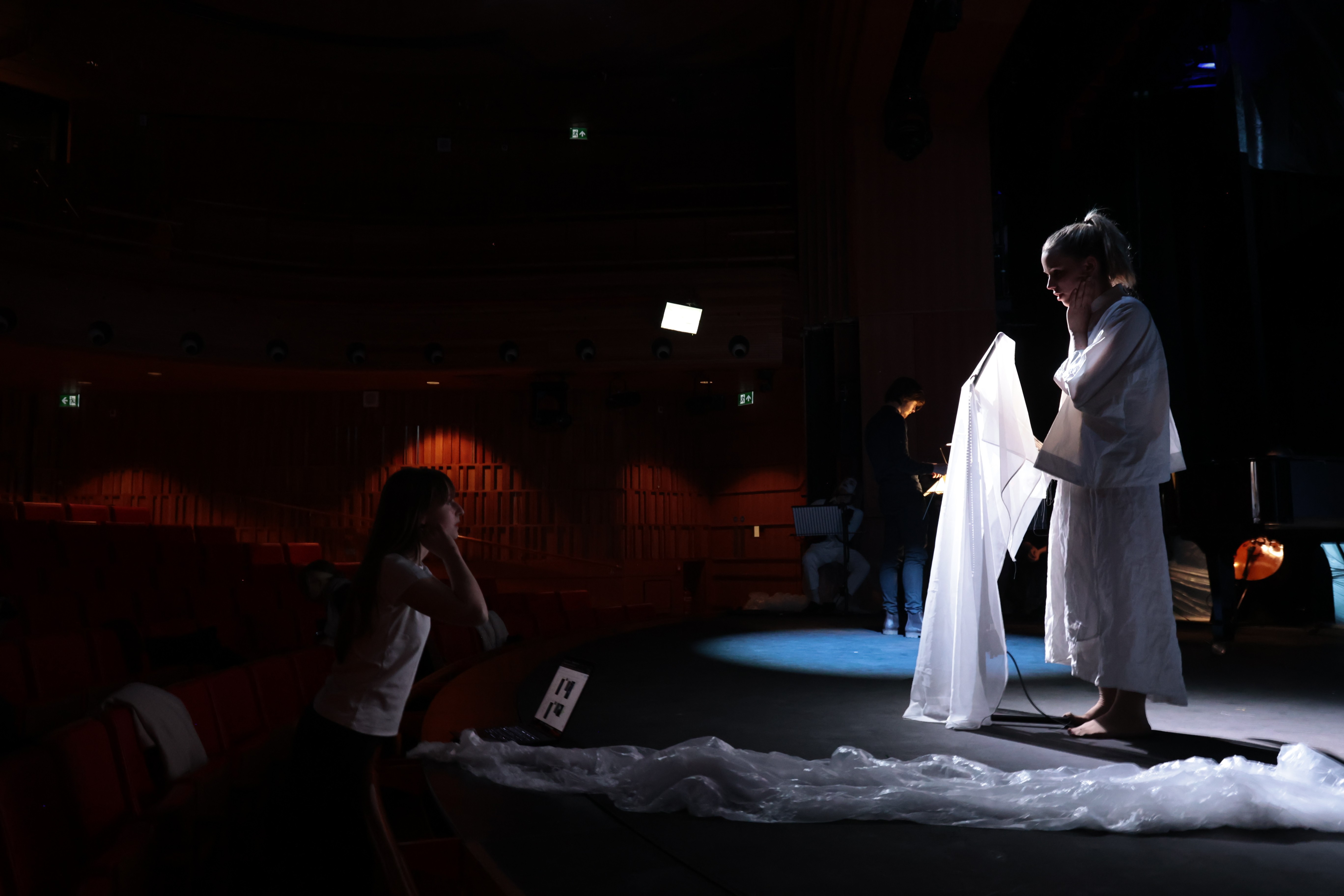
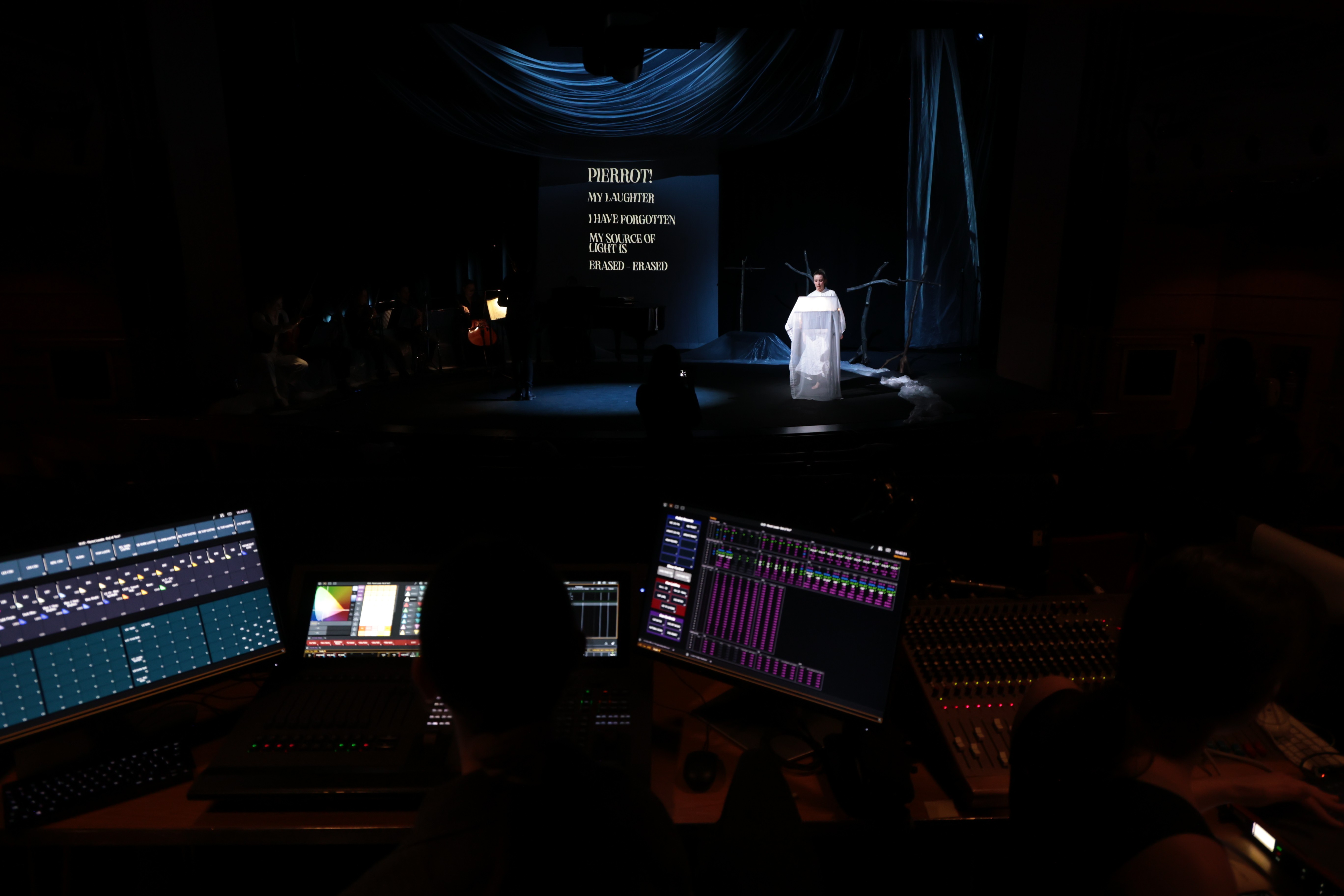
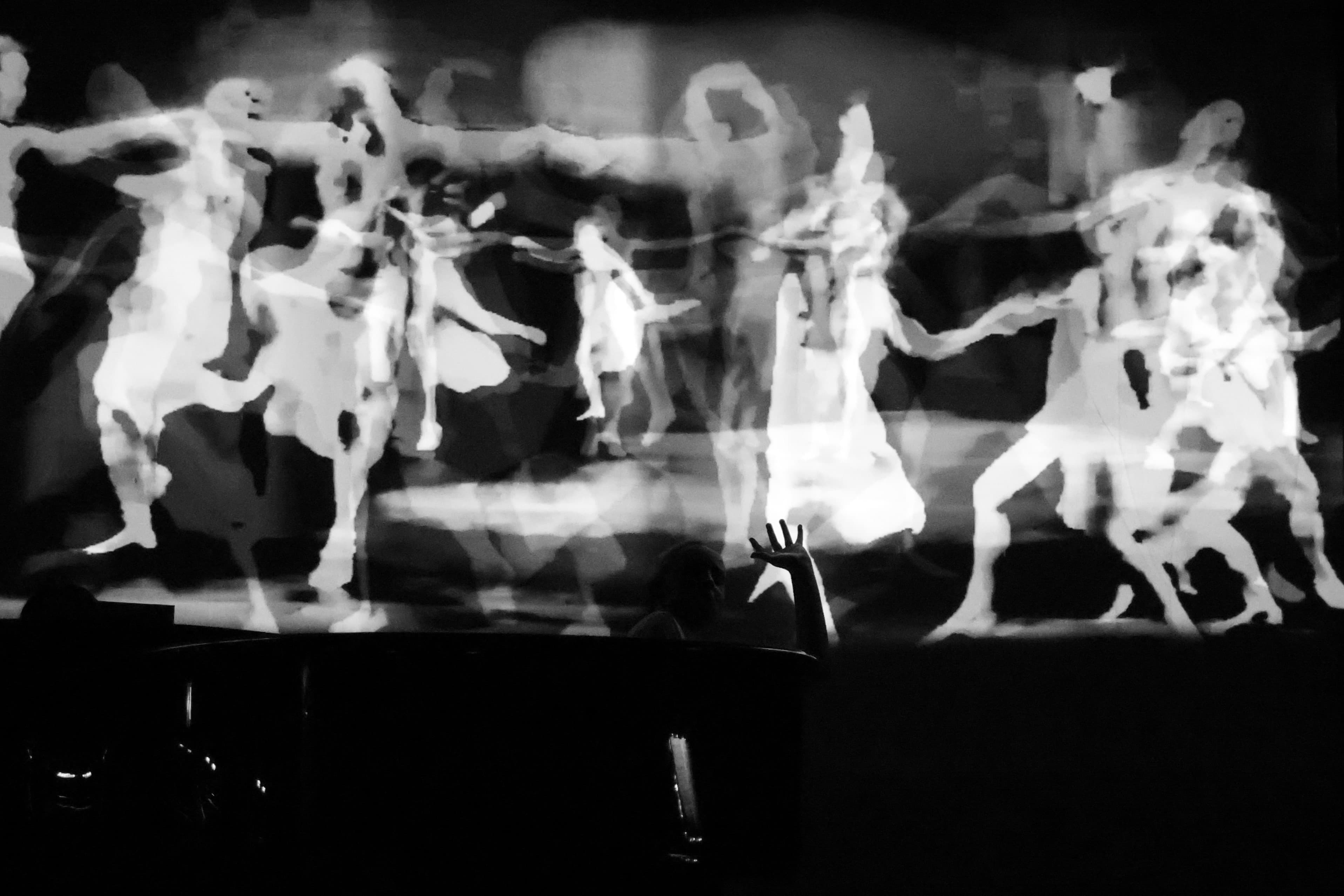
The concept crystallised from a single site visit to the Susie Sainsbury Theatre, where the intimacy of the space and its in-house infrastructure pointed toward a minimal material approach. A single plastic dust sheet became the production's central visual element, functioning simultaneously as veil, projection surface, and sculpture. Through a rehearsal-driven, collaborative process, shadow, red-saturated light, and rippling distortion evolved organically into the visual grammar of Pierrot's psychological descent.