Outernet
Tottenham Court Road, September 2024
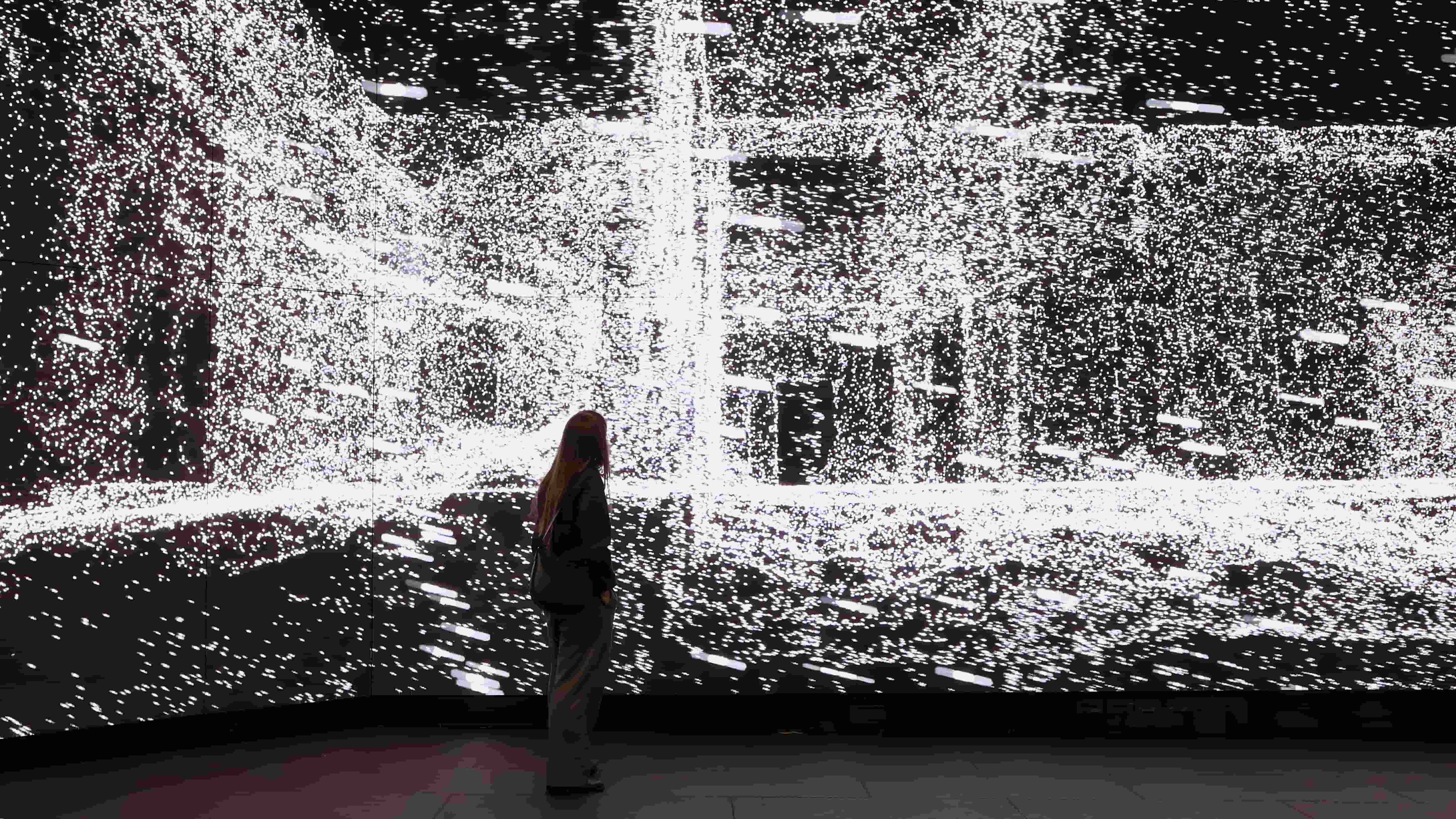
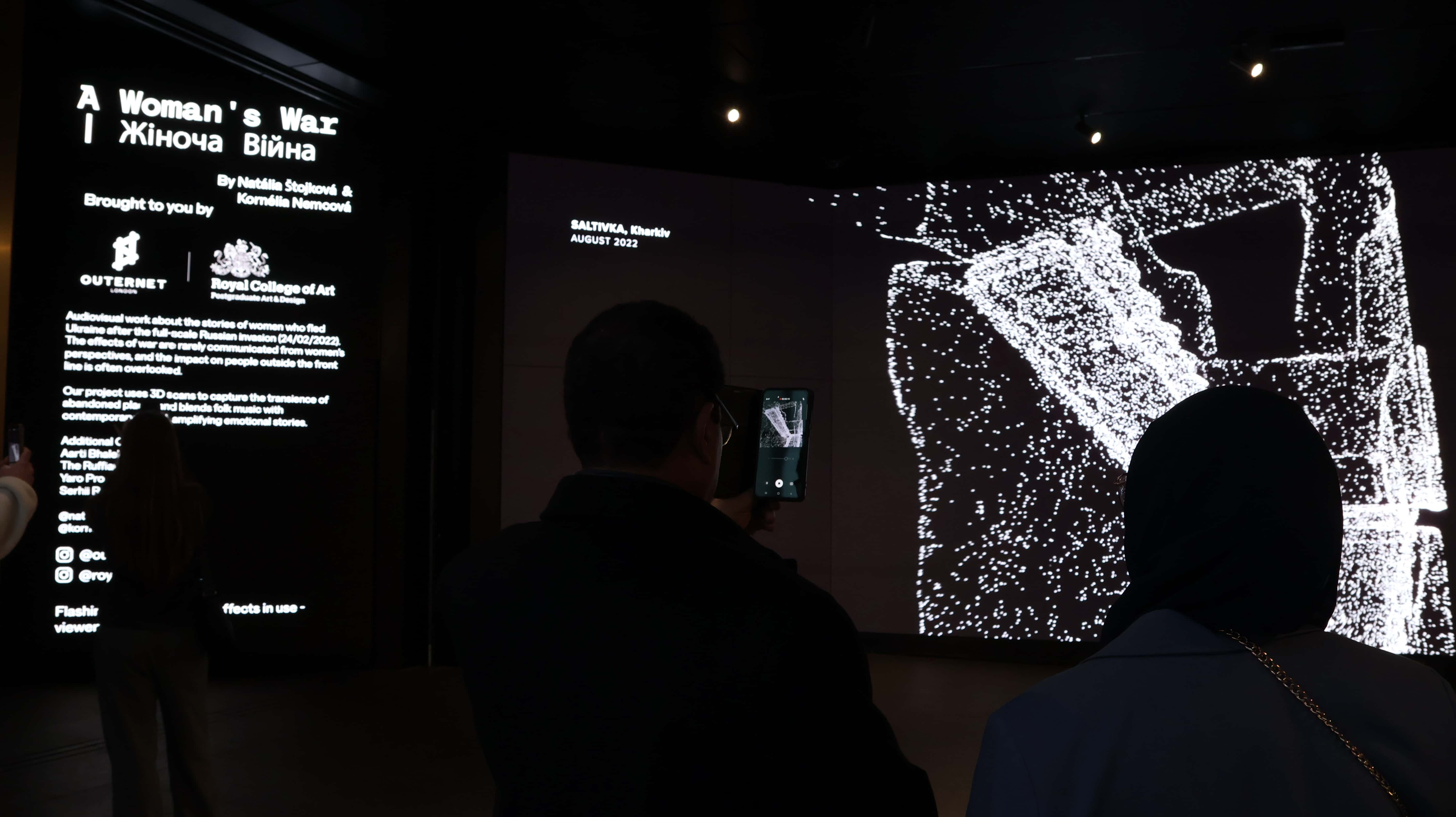
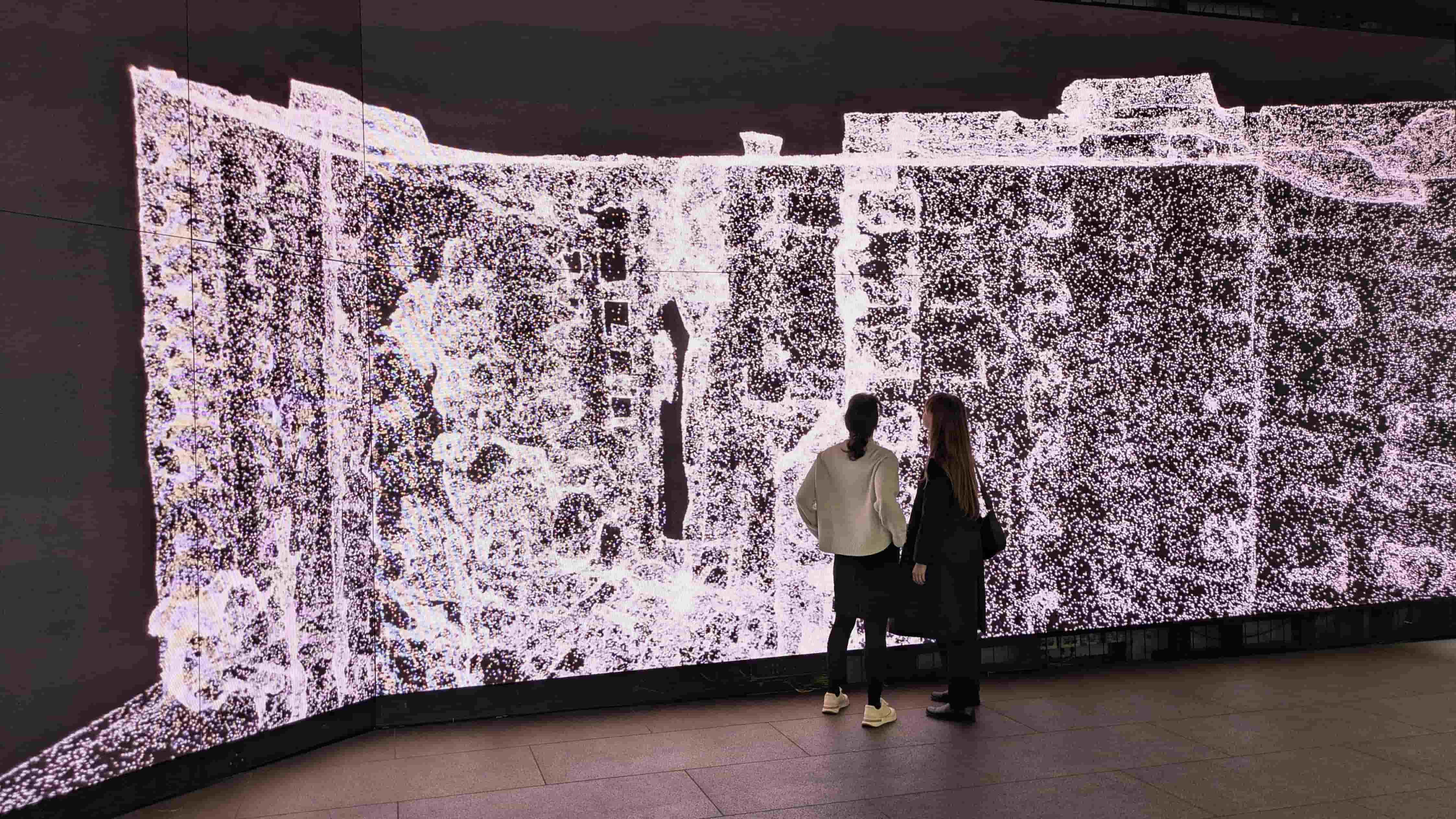
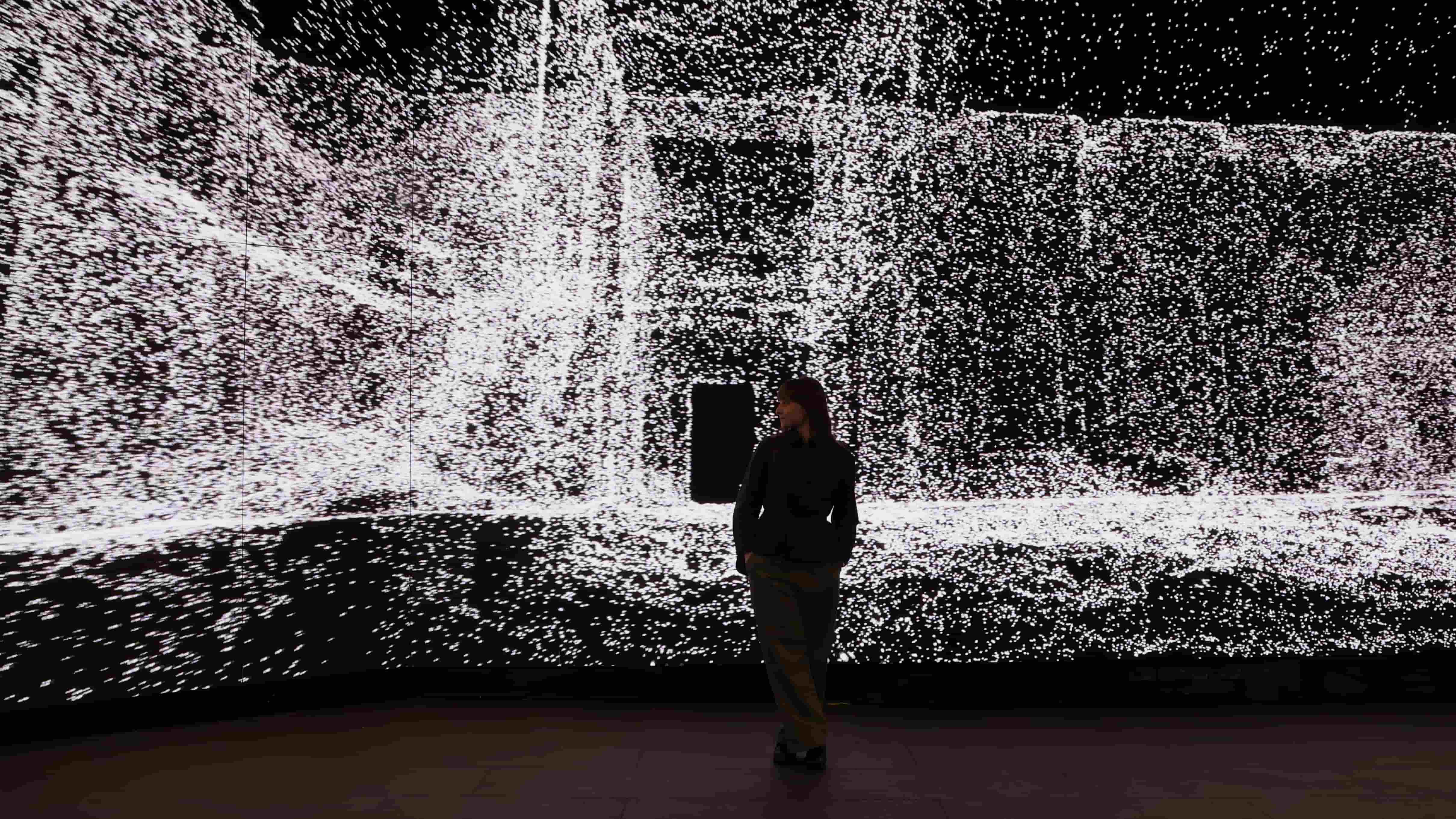
An immersive multi-sensory exhibition using 3D photogrammetry and particle-cloud visuals to explore displacement and resilience through authentic Ukrainian testimonies, premiering at Outernet London to 10M+ annual visitors.
10M+
annual visitors
4-days
Continuous screening
6
Prestigious venues
8 cities
across 3 countries
What was your specific role on this project?
As art director and technical artist, I was responsible for building and delivering the work inside Unreal Engine, translating the creative vision into a format optimised for Outernet's screen architecture, handling everything from particle system development to final output delivery.
Have you worked at scale in high-traffic public spaces?
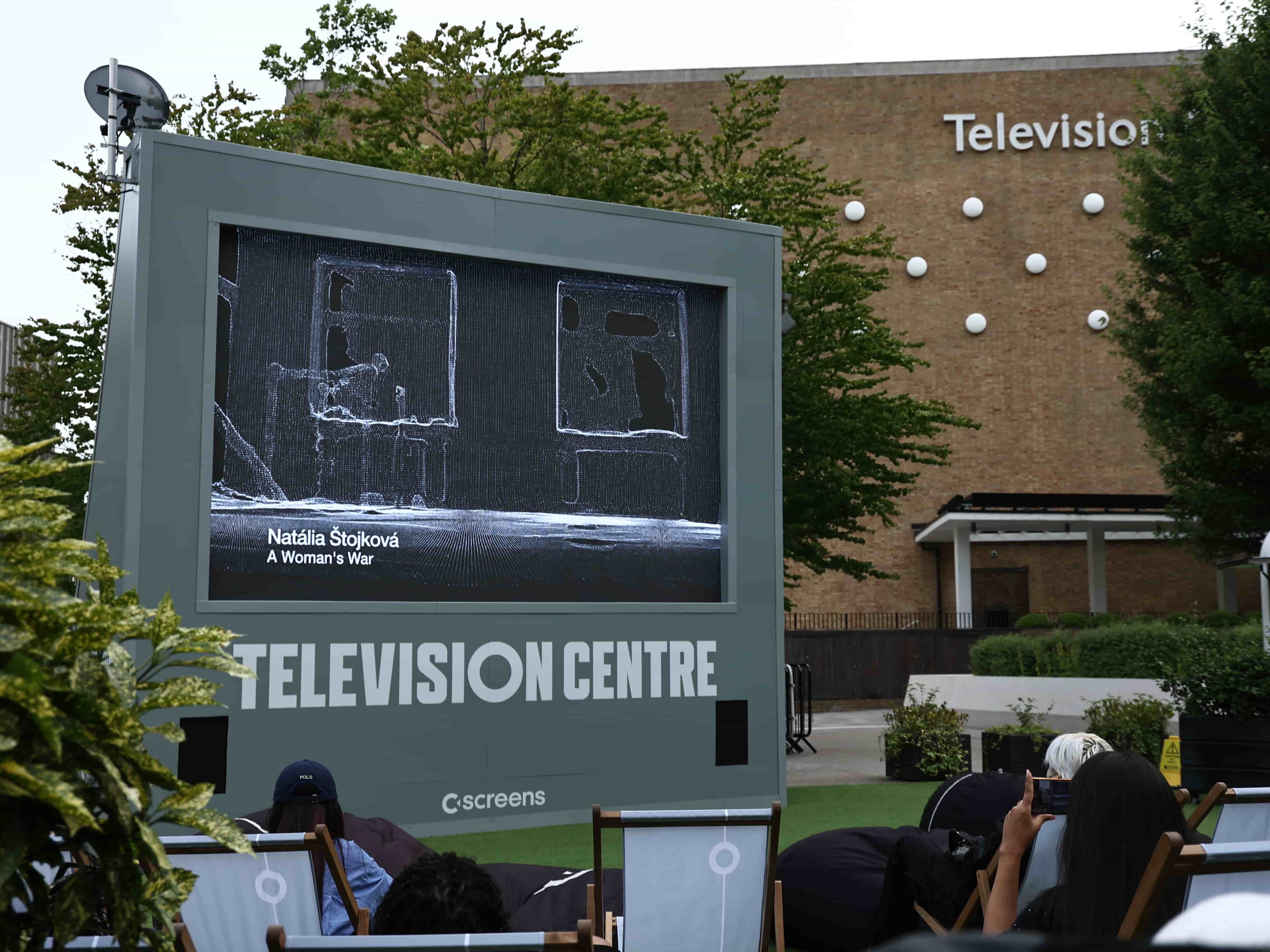
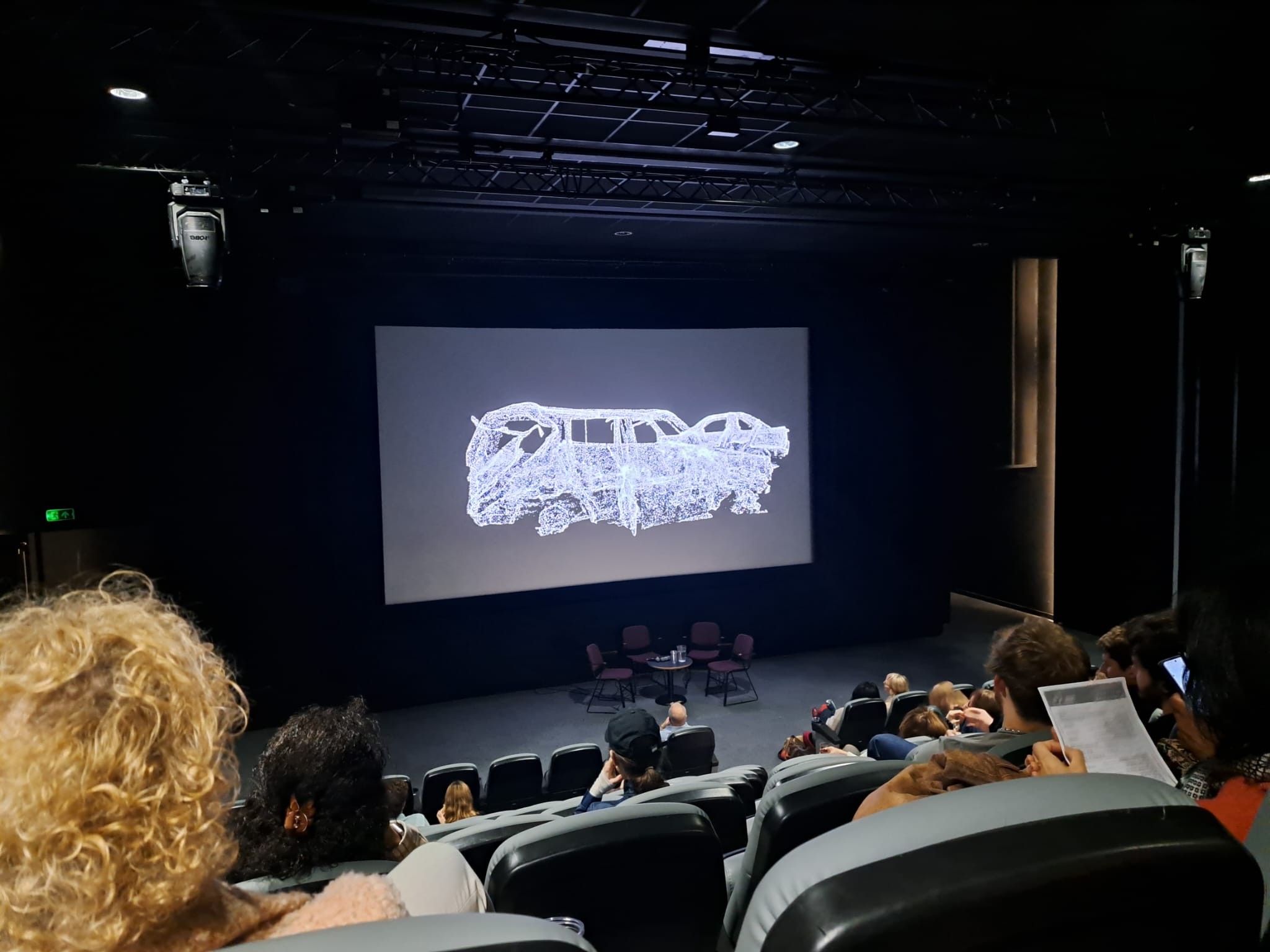
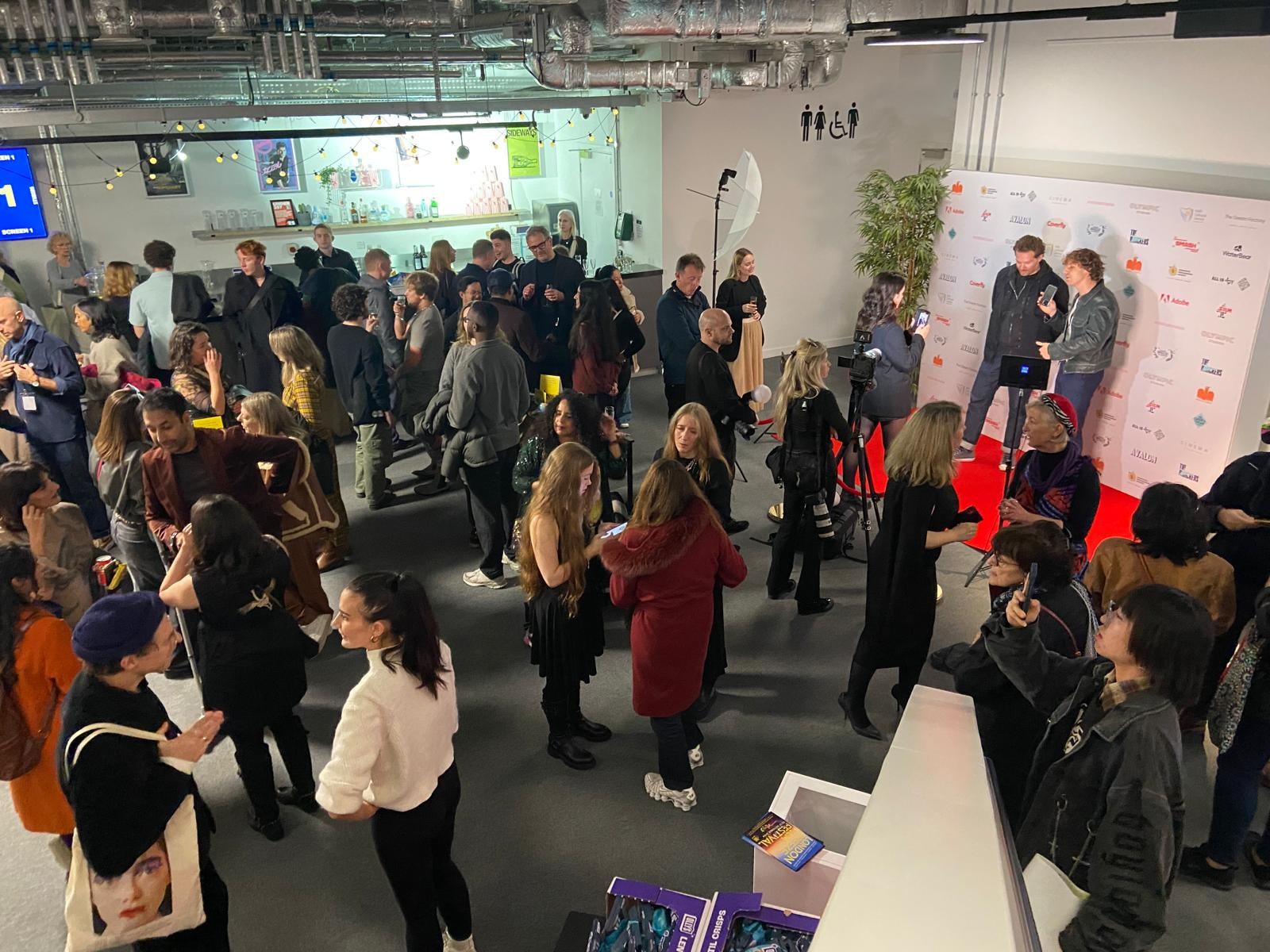
A Woman's War screened at six venues across eight cities and three countries — including Outernet London, BBC Television Centre, IDKF Stuttgart, SONA Immersive Art Festival Pittsburgh, White Conduit Projects, and London Breeze Film Festival, each presenting distinct technical and contextual demands.
How did you approach storytelling for a non-captive audience?
The work was deliberately structured around short, self-contained visual sequences drawn from 3D scans of Ukrainian landscapes, allowing audiences to engage meaningfully in passing rather than requiring sustained attention. The particle-based visuals proved particularly effective in high-footfall environments, generating spontaneous audience engagement and becoming a focal point that people chose to stop and photograph.
Overview
A Woman's War is an immersive digital exhibition conceived and directed for Outernet London, one of the world's highest-traffic public screen environments, reaching over 10 million visitors annually. The work translates a live performance into a large-scale digital installation, using 3D photogrammetry scans from Ukraine to generate particle-cloud visuals that fill the venue's continuous screen architecture across four days of uninterrupted screening.
Research
The work was built on a collaborative, research-informed process combining field documentation, spatial audio design, and real-time rendering techniques. Authentic testimonies were gathered and woven into a composed soundscape drawing on Ukrainian and Slovak folk and choral traditions, creating an emotional and sensory arc calibrated for a high-footfall, non-captive audience, people passing through, rather than sitting down.
Execution
Directing for Outernet demanded precision in translating intimate human stories into an environment defined by scale, noise, and constant movement. The result toured six institutional venues across eight cities and three countries from broadcast (BBC Television Centre) to festival (SONA, Pittsburgh; IDKF, Stuttgart) to gallery, demonstrating a consistent ability to adapt and present complex digital work across diverse, high-profile contexts.